
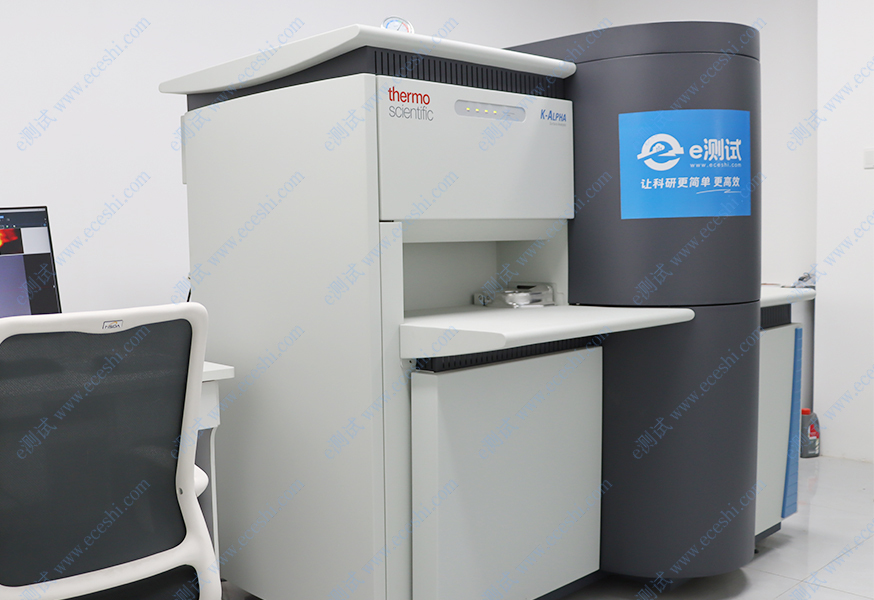
XPS is based on the photoelectric effect, where a material surface is irradiated with a focused X-ray beam, causing atoms to emit photoelectrons. By measuring the kinetic energy and intensity of these emitted electrons, XPS can identify the elements present on the surface and analyze their chemical bonding environments. Because photoelectrons can only escape from a very shallow region of the material, typically within a few nanometers, XPS provides highly surface-sensitive analysis.
XPS Testing Capabilities : Surface Elemental Analysis, Chemical State and Bonding Analysis, Functional Groups, Surface Composition Quantification, Depth Profile Analysis
XPS testing materials, including:
1. Metals and Alloys: Surface oxidation, corrosion products, elemental composition, and contamination analysis.
2. Semiconductor Materials: Surface composition, interface analysis, dopant investigation, and thin-film characterization.
3. Nanomaterials: Chemical states and surface functionalization of nanoparticles, graphene, carbon nanotubes, and other advanced materials.
4. Battery Materials: Electrode surface analysis, solid electrolyte interphase (SEI) characterization, degradation mechanisms, and elemental valence analysis.
5. Polymers and Organic Materials: Functional groups, chemical modification, additives, and aging analysis.
6. Catalysts: Active surface species, oxidation states, and reaction-related surface changes.
7. Coatings and Thin Films: Layer composition, adhesion issues, surface treatment evaluation, and failure analysis.
Our XPS services support universities, research institutions, and technology companies in understanding surface chemistry, optimizing material performance, and accelerating innovation. Whether for routine surface analysis, new material development, or complex failure investigation, With advanced analytical instruments, experienced technical specialists, and comprehensive material characterization capabilities, Eceshi delivers reliable XPS testing solutions for scientific research and industrial applications.