
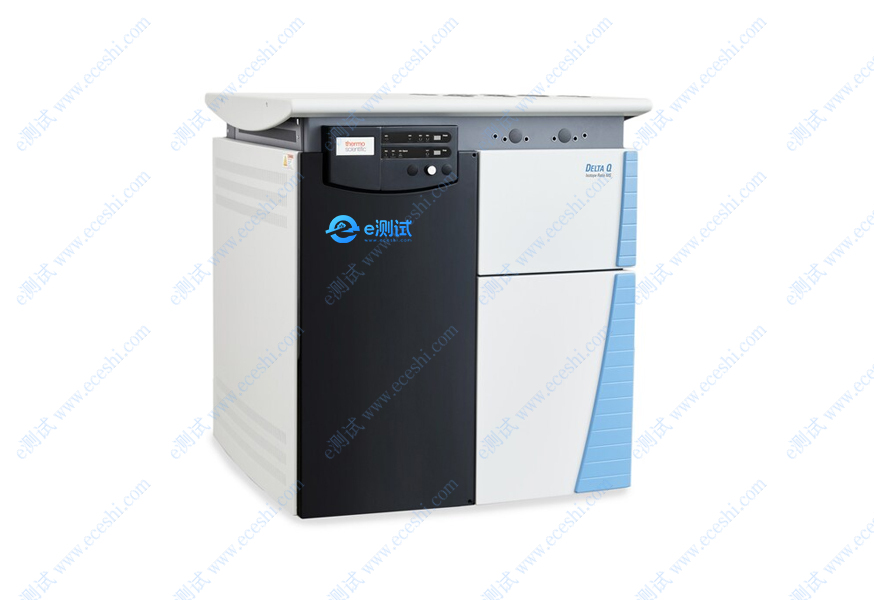
Common Isotopes Analyzed Elements
● Carbon isotopes (¹²C, ¹³C, ¹⁴C)
● Nitrogen isotopes (¹⁴N, ¹⁵N)
● Oxygen isotopes (¹⁶O, ¹⁷O, ¹⁸O)
● Hydrogen isotopes (¹H, ²H)
● Sulfur isotopes (³²S, ³⁴S)
● Lead isotopes (²⁰⁶Pb, ²⁰⁷Pb, ²⁰⁸Pb)
● Strontium isotopes (⁸⁷Sr/⁸⁶Sr)
Advantages of Isotope Analysis
High Precision: Provides accurate isotope ratio measurements for scientific and industrial applications.
Excellent Sensitivity: Capable of detecting isotope variations at very low concentration levels.
Source Identification: Helps determine the origin and traceability of materials.
Wide Applications: Suitable for environmental, geological, biological, and material research.
Reliable Data Support: Provides valuable information for research, quality control, and decision-making.
Applications of Isotope Analysis
1. Geological and Mineral Research
Isotope analysis is widely used in geology, mineralogy, and earth sciences to determine the age, formation conditions, and evolution history of rocks and minerals. Radiogenic isotope systems, such as uranium-lead (U-Pb), rubidium-strontium (Rb-Sr), and samarium-neodymium (Sm-Nd), are important tools for geological dating and crustal evolution studies.
2. Environmental Studies
Isotope testing provides powerful solutions for tracing environmental processes, including water cycle analysis, pollution source identification, and climate research. Stable isotopes of carbon, nitrogen, oxygen, and hydrogen can reveal information about environmental changes and ecosystem interactions.
3. Life Sciences and Biomedical Research
In biological and medical research, isotope analysis helps investigate metabolic pathways, nutrient cycles, drug distribution, and biological transformations. Isotope labeling techniques are commonly used to track molecular changes and understand complex biological mechanisms.
4. Food Authentication and Agriculture
Isotope analysis is increasingly applied in food safety and authenticity testing. By analyzing characteristic isotope signatures, researchers can identify product origins, verify authenticity, and detect potential adulteration in products such as wine, honey, meat, dairy products, and agricultural materials.
5. Materials Science and Industrial Applications
In advanced materials research, isotope analysis supports material characterization, impurity tracing, and process optimization. It can be applied to semiconductors, energy materials, catalysts, metals, and functional materials to study composition changes and material performance.