
Graphene: An Advanced Two-Dimensional Material
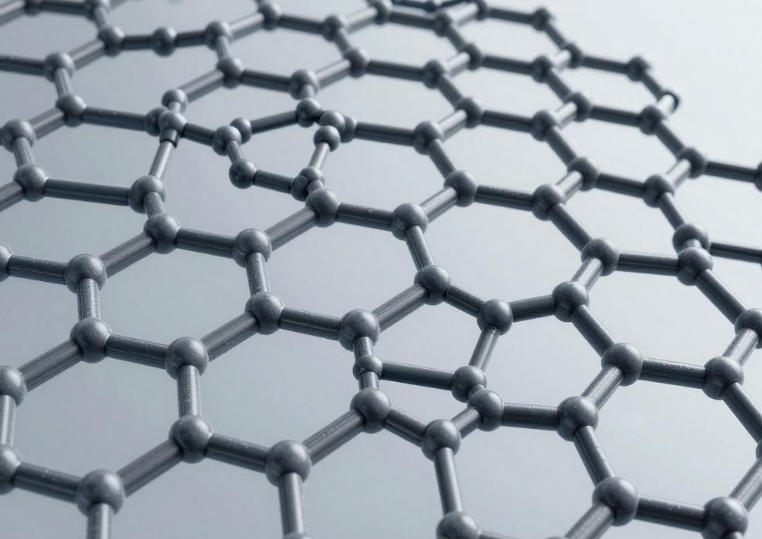
Graphene is a two-dimensional carbon material consisting of a single layer of carbon atoms arranged in a hexagonal honeycomb lattice. Although only one atom thick, graphene exhibits an exceptional combination of electrical, thermal, mechanical, optical, and surface properties, making it one of the most extensively studied advanced materials in modern materials science.
Today, graphene is being explored for applications ranging from energy storage and electronics to sensors, composite materials, thermal management, coatings, and advanced manufacturing.
As a professional reliability third-party testing organization, Eceshi Lab can provide Graphene Testing service according to ISO standards and industry requirements. Welcome to contact our experts for consultation.
The products we can test include but not limited to:
Graphene and Its Derivatives
Graphene is not limited to pristine monolayer material. A broad family of graphene-based materials has been developed to provide different chemical, structural, and functional characteristics.
Graphene (G):
A two-dimensional carbon material consisting primarily of sp²-bonded carbon atoms arranged in a hexagonal lattice.
Graphene Oxide (GO):
A chemically modified form of graphene containing oxygen-containing functional groups. GO generally offers greater chemical functionality and dispersibility, making it suitable for coatings, membranes, composites, sensors, and other applications.
Reduced Graphene Oxide (rGO):
A reduced form of graphene oxide in which part of the oxygen-containing functionality is removed, partially restoring the conjugated carbon network while retaining structural defects and functional groups. rGO is widely investigated for conductive composites, sensors, energy storage, and functional coatings.
Few-Layer and Multilayer Graphene:
Graphene can also be produced as few-layer or multilayer structures. Their properties can differ from those of ideal monolayer graphene depending on layer number, defect density, lateral dimensions, synthesis route, and processing conditions.
Graphene testing services include but not limited to:
Microscopy
Scanning electron microscope (SEM), scanning tunneling microscope (STM), transmission electron microscope (TEM) – Characterize the growth domain and surface morphology.
Atomic force microscopy (AFM) – Characterizes surface morphology, thickness, layer uniformity, and domain growth.
Spectroscopy
Raman spectroscopy – Identify graphene sheets and obtain layer number information
Infrared spectrum – Evaluation of the existence of functional groups.
UV-vis spectrum – Helps to evaluate the difference between graphene oxide and reduced graphene.
X-ray diffraction (X-ray powder diffraction) – Used to analyze the crystalline phase.
Photoelectron spectroscopy (X-ray photoelectron spectroscopy) – Analysis of surface chemical composition and bonding.
NMR – Obtain structural information, such as sp2 and sp3 carbon information.
Dynamic light scattering (dynamic light scattering and photon correlation spectroscopy) – Used to characterize or measure fluid size and submicron particles.
DPI (dual polarization Interferometry) – Helps to characterize the surface interaction between graphite oxide and other molecules.
Mechanical performance testing
Young's modulus
Poisson's ratio
Expansion test
Surface tension (relaxation and self-tightening of graphene film)
The gas transmission rate of the graphene film
Thermal performance and thermal effect analysis
Thermal conductivity
Thermogravimetric analysis (TGA) – Total carbon content
Thermal stability
In addition, the experts in our Graphene Testing Laboratory also provide a variety of custom services as your needs and requirements. Let's discuss the custom services with our experts for free.