XRF Testing Capabilities:
1. Qualitative Elemental Identification
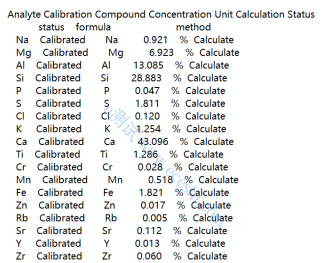
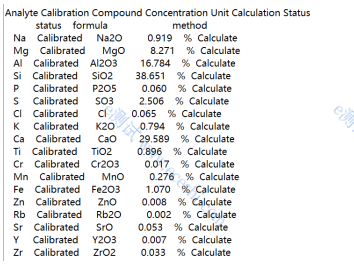
2. Quantitative Composition Analysis
3. Trace Element Detection
4. Heavy Metal Testing
5. Coating Thickness Measurement
6. Material Identification and Failure Analysis
As a versatile testing method, XRF analysis is extensively applied in materials research, metallurgy, geology, environmental analysis, electronics, energy, ceramics, and industrial quality control. It enables researchers and engineers to better understand material composition, verify product quality, and optimize manufacturing processes.
Materials Tested by XRF:
1. Metals and Alloys: Identification and quantification of alloying elements, impurity analysis, and material verification for steel, aluminum, copper, titanium, and other metal products.
2. Minerals and Geological Samples: Determination of major and trace elements in ores, rocks, and geological materials.
3. Ceramics and Glass: Analysis of elemental composition for ceramic products, glass materials, pigments, and coatings.
4. Electronic Materials: Detection of elements in semiconductors, printed circuit boards (PCBs), electronic components, and advanced functional materials.
5. Battery Materials: Elemental analysis of cathode materials, anode materials, and raw materials used in lithium-ion batteries and energy storage systems.
6. Environmental Samples: Measurement of heavy metals and inorganic elements in soil, sediment, dust, and industrial waste.
Advantages of XRF Testing
1. Non-destructive analysis: without damaging valuable samples
2. Fast testing speed: with minimal sample preparation
3. Multi-element detection: from a single measurement
4. High accuracy and reliability: for material characterization
5. Wide application range: across different industries